Meet Our Editor at PEN Oakland’s Poetry Event

Date: March 31, 2014
Categories: Inspiring Voices
Comments Off on Meet Our Editor at PEN Oakland’s Poetry Event
Thursday, 8 of October of 2026


Date: March 31, 2014
Categories: Inspiring Voices
Comments Off on Meet Our Editor at PEN Oakland’s Poetry Event

Happy Birthday Lucille! Congratulations on your PEN Oakland award. It was fun reading with you & Kirk in the botanical garden last summer and hearing your great poetry.
I remember how we drove around looking for the garden, which wasn’t exactly easy to find for first-timers. Then we walked among the potted plants set out on sale, and talked to the docents and helped ourselves to some of the food (pizza, mostly) laid out on folding tables in a corner of the garden.
The poets read under a partial canopy which shielded them from some of the fierce sun that time of year, but the audience (small, attentive) had no shade at all as they sat in front of the stage in a natural amphitheater.
–Dennis
Date: December 7, 2013
Categories: Inspiring Voices
Comments Off on Congratulations to Lucille Lang Day

“This video clip was commissioned by American Rivers in order to communicate some of the reasons for dam removal to Legislators and decision makers in D.C. Since these folk generally have short attention spans, and limited time – we kept it to 10 minutes. It only scratches the surface, and does not attempt to delve into the complexities of the Klamath River Basin Restoration Agreement.
The fact that stakeholders and agencies and conservation groups have gotten together to work out a solution is more than “Kumbaya” – it represents a shift from endless battling to seeking solutions – namely the removal of the 4 lowermost dams on the Klamath River.
Dam removal is the keystone to restoring the fishes and fisheries of the Klamath River. A stakeholder based agreement is more likely to get us there than anything else. The times are changing. Can we evolve with the changes?” –Brian D. Tripp
From the Spawning Ground – poem and songs by Brian D. Tripp from Thomas B. Dunklin on Vimeo.

This year’s Watershed got off to a slow start for me since I was busy gathering stuff to set up on the Poetry Flash table, as well as other things like emergency food, sunscreen etc. It was taking so much time I knew I wouldn’t make the Creek Walk this year, but oh well.
Finally I got everything together and left, shouldering a black daypack and carrying, rolled up, the warrior poets poster I planned to tape to a table edge if it was possible. I also brought a stack of warrior poet cards to leave on the table above the poster and to give out to each of the poets on stage as they finished their set, which I did but more about that later.
I set out across campus and hiked down one of the familiar ways that led to a eucalyptus grove named the Grinnell Natural Study area. The grove has the creek running through it, and as I skirted the Life Sciences building on my way to the west entrance of the campus I noticed a file of people making their way ahead of me. I caught up with them just in time to ask the last person in line if this was the Creek Walk. It was.
So I didn’t miss it after all, at least for a few steps. As the line continued to veer off to the east where the creek emerges from another grove of trees I went west and paralleled its culverted course as it swung through downtown and over, finally, to hide below Martin Luther King Jr. Park. where the Watershed event was being busily gotten ready for with people putting up banners, flags, and folding chairs for the day’s festivities.

I spotted Joyce right away and asked if it would be okay to put a few things out. She said yes and we walked over to the Poetry Flash booth to see what was available. When we got there I wound up taping the poster to a corner under a photo of the redwood whale that was at a couple of Watershed events, and put out a stack of warrior poet cards for people to see and take.
Then I drifted off and found Mark to see if he needed any help setting things up. He said everything was under control so thanks but no thanks. That gave me liberty to wander over to the Farmer’s Market for a look-around, then back to check out the other tables. At one of them the local chapter of 350.org had set up and I stopped and chatted with its members and gave one of them a warrior poet card.
I also walked by the Ecology Center booth but didn’t see anyone I knew, so I continued on my way until I finally grabbed a seat in the main viewing area, under a tie-dyed surplus parachute Mark had discovered while visiting a surplus store. The parachute provided good shade and the sound was excellent as I was right in front of the speakers albeit thirty feet away.
 I was up from my seat looking at pictures from past events that were on a pole right behind me when Richard Silberg stepped up to the mic and welcomed everybody to the 18th Watershed Environmental Poetry Festival. That’s when I knew the hands of the clock had finally touched twelve, as Watershed always starts at the crack of noon.
After Richard’s introductory welcome we were treated to music from the Barry Finnerty Trio, a very fine jazz trio that’s been serenading Watershed-goers for years. The program called Richard’s introductory welcome “Stand Up for the Earth!” and this set the tone for everything to come.
After listening to a little jazz Richard came back to the mic and announced the “We Are Nature” open reading and called out six names. Six people who had their names pulled from a hat who wanted to read all came up, one by one, in the order Richard announced them.
This year the open reading had some mighty good poetry in it. Each of the readers was articulate, evocative, and kept to the day’s theme. So anyone who came late and missed this part missed a really good section. And this was just the beginning.
 Next David Lukas, free-lance naturalist who led the Creek Walk, took the stage and spoke eloquently and succinctly about the Creek and its history and ecology and relation to the campus. His extemporaneous remarks didn’t last long but served as good background for the next part of the event, which was the readings by the poets who had also gone on the Creek Walk.
Richard, our emcee for the day, introduced the Creek Walk poets one by one, and the first to read was Mary Mackey, who set the bar high with her passionate, well-crafted reading and poems. Mary was followed by John Shoptaw, Barbara Jane Reyes, Tom Wilson, Jennifer Elise Foerster, and finally by performance poet Chris Olander, wearing his warrior poets t-shirt for the occasion.
When Chris finished we were treated to readings by the youngest among us, student poets from California Poets in the Schools introduced by Maureen Hurley, and River of Words and Poetry Inside Out winners introduced by John Oliver Simon. This is a traditional part of the program and what helps make Watershed unique, not to mention enjoyable for people of all ages.
After listening to the poems of “the poets of the future” as Richard introduced them, we heard a little more from the Barry Finnity Trio. I decided it was time to revisit the Farmer’s Market and did so while very good strains of jazz were rising in the background.

Suddenly the strains stopped and I heard a familiar voice. I hurried back from the market to hear Kirk Lumpkin, Ecology Center/Farmer’s Market presenter, speak to the crowd. I regained my seat in time to hear Kirk do a poem then introduce Ozzie Zehner, author of “Green Illusions: The Dirty Secrets of Clean Energy and the Future of Environmentalism.”
Taking the mic, Ozzie began by saying he wasn’t attempting to overthrow environmentalism, just to question some of the assumptions we have about “clean energy”. Then he launched into an anecdote about his career as a green architect, and read a short section from his book to illustrate his point, which threw cold water on numerous “tekkie” ideas about having our cake and eating it too.
When Ozzie walked offstage our emcee regained the mic and introduced poet Alan Soldofsky, who steered the day’s event back to ecopoetry. Then Alan was followed by Ann Fisher-Wirth, reading from her six-year long project that just got 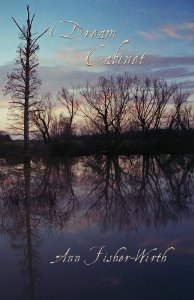 published this year, “The Ecopoetry Anthology”. As you can see the Watershed event had a lot of depth this year, and we’re just getting started.
After Ann Fisher Wirth we heard Giovanni Singleton, and then Brian Teare took center stage and read us a number of long, naturalistic poems, most of them set in California. Then we were treated to more jazz followed by Matthew Zapruder, who started with a poem titled “Global Warming”. With the sun beating down as hard as it did for most of the day, no one in attendance needed to be convinced of that, although, of course, scientifically there’s no connection.
Following Matthew we got to listen to Brenda Hillman, whose monumental series of books about Earth, Air and Water has now been completed with one about Fire called “Seasonal Works With Letters On Fire“. Just to hear Brenda read from her latest book was a treat, and she also pointed out that the hat she was wearing was a souvenir from a global warming demo at the White House where she and her husband and the president of the Sierra Club all got arrested. Going to a demo was a good way to get a free hat, she said.
Five sixths of the day was now over and we were ready for the final sixth, which started with Bob Hass taking center stage with special guest Wang Jiaxin. Wang is a poet from China visiting in the U.S. and teaching here. Together they did a reading and translation duet with Wang reading the original and Bob following with the English translation. I don’t remember a similar event at any of the previous Watersheds, so this gave this year’s Watershed a flavor all its own.

The poems, in English at least, were imagistic and, at times, funny. They may also have been political in the original, but I wouldn’t know that. After the dual reading, Bob Hass read us a few short poems of his own, giving Richard Silberg enough time to come up and introduce the final reader of the day’s event, Gary Snyder.
Richard always has a personal way of introducing the next poet or reader or music trio, and by the time the poet or reader or trio comes up we feel we know enough about them to get ready to listen to them. Of course everyone there at Watershed already knew something about Gary Snyder or had at least heard about him, so Richard had to come up with something to tell us that we didn’t know. This he did by telling us what he didn’t know about Gary, that Gary had begun his career as a mountain climber, even before he took up poetry. Then he added that Gary was one of the original readers in the Gallery Six Reading that launched the so-called “Beat Generation”, and invited us to “Welcome Gary Snyder” which we did, to thunderous applause.
G ary, now in his eighth decade but hardly looking it, stepped up to the mic and immediately put everyone at ease by talking to us just like we were guests in his living room.
After a few anecdotes he said he was going to read us a few poems that had not been published (“at least yet”) and read us “Gnarly”, “Anger, Cattle and Achilles”, “Why California Will Never Be Like Tuscany”, “Starting the Spring Garden and Thinking of Tom Jefferson” and several other poems, ending us with “Five Short Poems for Fixing the System”.
After the first poem (applause from the crowd) Gary said “I should have said this before I started, I’m going to make a rule–no applause after a poem. When I’m finished if you applaud, that’s your business.” It was tough, at times, holding back, but we did the best we could. And at the end, everybody applauded.
Then Bob Hass came back on and invited several of the other poets who had read that day (including Joyce Jenkins, who with Mark Baldridge are the mainstays of Watershed and the reason it goes on each year, who hadn’t read) to end the day by doing a group reading of a poem by Seamus Heaney, who recently passed away. Each read four lines with Bob reading the end of the poem, and with it, ending this year’s Watershed. Except for more great jazz from the Barry Finnerty Trio and getting in line at the book table for signed copies by the poets that had read that day.
–Dennis Fritzinger
Date: October 8, 2013
Categories: Inspiring Voices
Comments Off on Report: This Year’s Watershed Poetry Festival

Here’s why Brock’s new war is unique:
A few of us are working pro bono to get this book into the hands of thousands of high school and college students for an unbeatable price: FREE.
There’s never been a book, or book-giveaway blitz, anything like it. Will you contribute? Even five dollars helps!
Imagine the results of delivering a step-by-step manifesto to passionate young people on how to get and keep grassroots support; how to change a hostile Congressman’s mind; how to get a public hearing delayed if you need to buy time to polish your presentation; how to get a bad building project shut down even after a permit has been issued; and so on. Plus all the tips in the book come with case histories from real-life eco-battles waged and won.
Brock and his friends have spent decades learning these skills the hard way. His book Fight & Win will give new activists an incredible shortcut to pulling off the victories we need them to achieve – for all our sakes.
Ten percent of all funds raised in this Fight & Win Campaign will go directly to the Endangered Species Coalition as a donation. Supporters can find out more – and how to help – by going to the publisher’s website.
Release of the book is scheduled for December 3, with a launch at the National Press Club in Washington. We will appreciate your help — and you’ll love the book.
John C. Campbell
Campbell Communications, Inc.
202.363.2069
Date: September 11, 2013
Categories: Inspiring Voices
Comments Off on Fight & Win: Brock Evans’s Strategies for the New Eco-Warrior
 Last year in a previous post our editor writes:
“I’ve been to every single Watershed Environmental Poetry Festival, and now this is going to be the 17th.” I guess that makes this year his 18th…
He also writes:
“One year the music was even provided by the creek itself, its gurglings miked to a loudspeaker so all could hear. When the Watershed Festival came along I was delighted. It’s like, “I’m marching alone here now — who will join me?” and they joined me.”
Dennis’ thoughts on the event the year before last:
“Yesterday was a mixed bag. Each year the event has had a featured speaker, a featured poet, and a River of Words component. This years featured speaker was going to be Peter Berg, founder of Planet Drum, but he passed away before the event and no one replaced him. Someone from EcoCity Builders was usually there, but not this year.
The featured poet is usually a high profile guest poet like Joy Harjo, Linda Hogan or Lawrence Ferlinghetti. This year we had a list of very good but less high profile poets, and the implicit environmental theme of the day was usually, but not always, muted in their presentation. With Jane Hirshfield this works; not so well with others. We always have the high profile Bob Hass, but since the event is his baby, he’s expected to be there.”
28 SEPTEMBER 2013 — SATURDAY:
Date: August 21, 2013
Categories: Inspiring Voices
Comments Off on 18th Annual Watershed Environmental Poetry Festival
#1

(Excerpt from HuffPo) “One hundred years from now Nanao will be considered the major poetic influence in Japan,” said Gary Snyder at a recent gathering in the late Nanao Sakaki’s honor. Considering the source, that’s very high praise indeed. But most Americans, even those who enjoy poetry, might well respond “Who?” And thus this little tribute, in honor of one of my very favorites.
I first came across Nanao Sakaki’s little book Break the Mirror (published first by North Point Press) by chance and it became an essential book for me, and one I gave as a gift many times. The first poem therein, “Happy Lucky Idiot” had me hooked from the start:
If you have time to chatter
Read books
If you have time to read
Walk into mountain, desert and ocean
If you have time to walk
Sing Songs and dance
If you have time to dance
Sit quietly, you Happy Lucky Idiot
Snyder, in his introduction to that little book, called Nanao “a uniquely free and bold-spirited wanderer, occasional river or mountain activist, singer and chanter and internationally published poet.” Now, five years after Nanao’s dying, a collection of his writing has finally appeared, titled How to Live on the Planet Earth.
====================
#2
Friends of Nanao,
On may 10 we had a publishing party for our book by Nanao Sakaki – How To Live On the Planet Earth. The event was sponsored by San Francisco State, and attended by over 200 people. Readers included Gary Snyder, Joanne Kyger, Michael McClure, Malcolm Margolin, Dale Pendell and Gary Lawless. Our friend Kush, from Cloud House, filmed the event, and is now turning that footage into a wonderful document, with a complete recording of the entire reading. Kush never has funding, so we are trying to help him raise some funding for the film. We are looking for donations and would of course love to find a donor willing to make a large donation to the project, but at this point we are also offerring, for a $40 donation, a complete 2 dvd recording of the event, sent priority to your door from cloud house, a full record of a wonderful celebration of Nanao’s life and poetry. You can reach Kush at cloud house, 1557 franklin street, san francisco, ca, 94109, phone 415-292-5554 or email beginsberg@gmail.com
we are hoping that some of you will want to help in getting this wonderful event out and around, singing to the world.
Thanks!
Gary Lawless
Blackberry Books
Date: August 11, 2013
Categories: Inspiring Voices
Comments Off on Nanao Sakaki in the News (2 items)
 Dana Lyons has always impressed me with his ability to write songs that were funny, yet funny in a good way. If he poked fun at something, he included himself in the humor (I’m thinking of his classic song “RV”). His songs always tell a story, and usually we can recognize the people in the story. Sometimes we even see ourselves.
But often not. Dana will write about people he knows, and while we can look on and listen, we can’t become those people. Yet we can sympathize. Or learn from them, be inspired by them.
One of the things I admire in Dana’s music is his capacity for empathy. In one song he empathizes with farmers whose farms have been taken over by giant powerlines. In another song he empathizes with a river that has a dam on it. In countless songs he writes about the lives of ordinary people and somehow manages to really hear their stories then turn around and express them in musical form.
Dana’s songs are rough-edged sometimes but sweet-voiced always; quite often funny, especially when humor is the sweet that covers up the bitter truth, but also reflective in a way where the words support you like a rubber raft on a slow-moving, warm green summer river drifting under overhanging trees and a clear blue sky scattered with puffy white clouds.
This poet with guitar mostly does the Washington State – Australia circuit, with occasional forays to Alaska and I think once Ireland. Dana is also known as an activist with a guitar, and regularly shows up to lend his poetic might at blockades, dam decommissionings and the like.
Dana is well-known in Earth First! circles, having appeared at campfires and on rally stages for years, always with a new song or two and a bunch of favorites as well.
You’ll notice I’ve been writing about a single performer, one without a band to back him up. Perhaps this is why Dana is so loved, yet still largely unknown. Bands give you a big sound, and if you have a big sound you can command everything a big sound commands — equipment, stages, huge audiences, huge venues, and the like. Bruce Springsteen, for example. But you can think of others.
Much as I love Bruce (the Boss) and his small-town stories, his classic themes and the like, he doesn’t write about trees the way that Dana does. Maybe it’s because he’s from New Jersey.
Dana and the Boss are both poets with guitars, but Dana is an Earth First! poet with a guitar, and that makes all the difference.
–Dennis Fritzinger
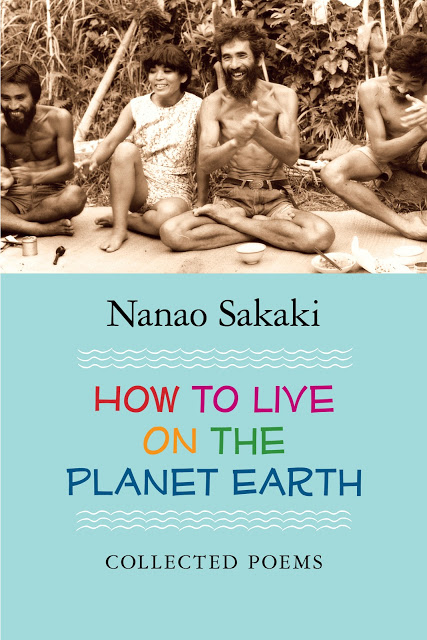
 How to Live on the Planet Earth
Collected Poems of Nanao Sakaki,
Blackberry Books, 2013, 298 pages
(157 poems, 2 short plays, and some experimental verse).
ISBN 978-0-9824389-4-7, $16.95
How to live on the planet Earth? is a question more in need of answers today than ever before. Remove the question mark and you get the promise of answers, or maybe an answer, as if this was another 50 Simple Things You Can Do to Save the Earth. Instead it’s a book of poetry, one which touches on the issues here and there but mostly records the life of its iconoclastic author, who wanders, we notice right away, far and wide.
Nanao Sakaki wasn’t always the amazing poet he became, as shown by the experimental verse that leads off How to Live on the Planet Earth. That verse links him to the experimentation of the ’60s, and earlier, the ’50s, where in fact he was involved in the avant-garde arts movement that developed in post-war Japan.
I had the pleasure of seeing Nanao live, in person, only once, and I don’t think we even met. Except that our interests were similar. It was at a Rainforest Conference in San Francisco at Fort Mason, and I just happened to show up right before a panel discussion was to start, and there, on the panel, was Nanao.
I knew who he was already, having read Break the Mirror, a book I deeply admired. He seemed a bit smaller than I imagined he would be, not quite hobbit-small, but getting there. And didn’t seem boisterous or loud or talkative at all. If anything he seemed like he was wondering what was going on around him, or maybe he was just thinking about lunch.
 Nanao had an interesting background, serving in the Japanese air force as a radar analyst during WWII. In fact he saw the bomber pass overhead, a blip on his screen, on its way to deliver the second atomic bomb used in warfare. A single blip didn’t set off any alarms at the time — probably it was considered a feint meant to distract from a much bigger fleet of planes.
I’ll always have this image of Nanao sitting there, watching this blip go across a screen.
Later, of course, in the ferment of East-meets-West that was the post-war American occupation of Japan, Nanao got involved in the arts movement and became a leader in fact. From this background he grew into what was to become the Nanao in most of these poems.
Gary Snyder introduces How to Live on the Planet Earth with an overview of Nanao’s style and influence. Gary, as always, has many interesting things to say and I refer you to his introduction for a lengthier appreciation of Nanao’s career. It wasn’t until I read this introduction that I was aware Nanao had recorded 2 CD’s, but I’m not surprised given the performance quality of his poetry.
One of the poems Gary mentions in the preface is a poem Nanao wrote on “the planetary ecology of toilet paper.” A good example of Nanao’s style, it reads like an interesting, slightly eccentric friend’s riff on the subject, going all over the board as he does so. Its language is frequently earthy, as befits its subject, yet the poem humorously brings in the other sphere — seas and streams, whales and salamanders. It’s like taking a nature walk down a supermarket aisle, and it was written in 1978!
Nanao is what you would call an eco-poet, writing mostly what Ann Fisher-Wirth and Laura-Gray Street call environmental poetry. (Their definition of ecopoetry goes the spectrum from nature poetry through environmental poetry to ecological poetry, with environmental poetry having an activist tinge to it. Warrior poetry, in other words.)
And now, on with the show.
Jokes…riddles…an appreciation of Deep Time, an appreciation of right now, an appreciation of the small.
One of Nanao’s poems, “A Love Letter”, reminds me of a famous documentary called “Powers of Ten,” and it’s just one of the poems that shows Nanao’s affinity for stars, galaxies, the universe, which sets him apart from the majority of poets writing today.
 Many of Nanao’s poems explore/expose the contradictions of living in a society such as our own, and do it with great good humor (not the only way to do it, but often the most effective). More than most poets, he seems to have an affinity for small things, writing poems about stinkbugs, silverfish, and various plants and mushrooms. When you see a particular species show up in a poem, in the body of the poem it usually goes by its common name, but then there’ll be a footnote that gives its scientific name at the end of the poem, which serves to narrow down and sharpen the image we were served up, at least if you have a field guide handy!
Outside of himself, the main characters in Nanao’s poems are plants, animals and mushrooms, stars and galaxies. These are contrasted with, for example, toilet paper, nuclear weapons and by-products, and plastic trees.
At one point he even calls himself “an Ecology freak.” Living up to his self-description he declares, “Hokkaido island will be an independent country.”
Nanao’s poems have a lightness of feel despite their occasional heavy subject matter. This could be due to the light touch on the reins he continually shows. Short lines, use of pop culture references, jokes and other humorous twists and turns, even taking himself not too seriously, all contribute.
Here’s an example of Nanao at his most light-hearted:
If you have time to chatter
Read books
If you have time to read
Walk into mountain, desert and ocean
If you have time to walk
Sing songs and dance
If you have time to dance
Sit quietly, you Happy Lucky Idiot
About the author of this review: Dennis Fritzinger has a poetry website, armedwithvisions.com, and invites you to drop by.
[Published in the Spring 2013 issue of Pulse by Planet Drum, “A Voice for Bioregional Sustainability, Education & Culture”)
Date: July 3, 2013
Categories: Inspiring Voices
Comments Off on Dennis Fritzinger on Collected Poems of Nanao Sakaki
Besides the Earth First! Journal, which has always been a home for deep green poetry, there are three other publications worthy of note that have attracted many fine nature poets and published many fine poems.
They are Wilderness, published by the Wilderness Society; OnEarth (formerly Amicus Journal), published by the NRDC (Natural Resources Defense Council); and Orion, published by the Orion Society.

Brian Swann, poetry editor for OnEarth/Amicus, has been on the job the longest, with John Daniel, poetry editor for Wilderness, close behind. Orion’s poetry editor, Hannah Fries, came to Orion as an intern in 2005.
Not only are these three editors of periodicals, two of them are also editors of anthologies, which are better for sticking in a backpack or pocket of a field jacket. These collections are words to share at campfires, words to read to the trees, words to declaim at the beach.
Out of all of them, Brian Swann may be the best of the bunch, though it’s a close call. Besides editing poetry for an incredibly long time (3 or 4 decades) he’s produced two books, the more recent being Poetry Comes Up Where It Can, which is a line in a poem by Homero Aridjis. It also pretty much describes the healthy state of so much fresh pure green poetry as works of living ecology and hydrology currently rising:

among boulders charging madly upstream;
to feel its handle yank at and flutter half free
of your fingers; to catch that dim chime
stainless steel barely gives off, nicking rock
underwater; to wet shirt-cotton with dribbles
so icy the frontal lobes ache like migraine
after each swallow; then, as that fades,
to dip again to the bottom of the world’s well
which around here is snowpack so near to the sky
that’s pretty much what it tastes like,
you could borrow this cup.
(by Reg Saner, from anthology:Poetry Comes Up Where It Can)
And then in John Daniel’s book, Wild Song, there is equal beauty and wonder — it includes many of the same poets as Swann’s collection. Especially when it comes to throwing out a hook in the first few lines that drags the reader in. For example, the beginning of “Camping in the Cascades” by Joseph Powell:
Hungry for bootprints, shades of differences,
we’ve come to think like the earth.
Or the opening lines of “Chainsaw” by Roger Jones:
The way it pops and razzes
and grumbles under its breath,
In his preface Daniel’s writes: “Early in 1988 I wrote Tom Watkins, editor of Wilderness, urging him to publish poetry in the magazine. To my surprise, and perhaps to his, Tom wrote back, ‘Why don’t we give it a shot? You’re the poetry editor.’”
As editors of green poetry we’ve an obligation to not give up on unearthing (cultivating) a green poem in all its many varieties, whenever and wherever it arises. The poems these particular editors choose are the healing edge of Green Poetry!
 All us editors recommend you try going through these publications and landing on any page (and any poem), it’s a real treat! Not just in “this is a great poem” sense, but “this is a great green poem” sense. The color of the poem makes a difference, after all.
And some may ask why does any of this matter?
First, I’m grateful that other publications, have devoted ink and electrons to the true task of the warriorpoet. Second, I’m grateful that major organizations are discriminating enough to find green poetry editors. And finally, third, the green poet’s/poem’s task itself: bring the non-human into the equation.
That task is what seems both ecologically correct and humble. The human animal is perhaps most human when it is most humble, or at least I think so.
Finally, I’ve come to the conclusion that the necessity that editors of green poetry are most concerned with is the necessity of quashing the human ego long enough so the rest of our living earth can speak and be spoken for. And this green poetic voice we curate, it’s still young.
May this young bear cub we call green poetry grow old and wise and one day roar like a giant mama bear protecting her young.
Howls!
Dennis Fritzinger
Chief cook and bottle washer
Warrior Poets Society